
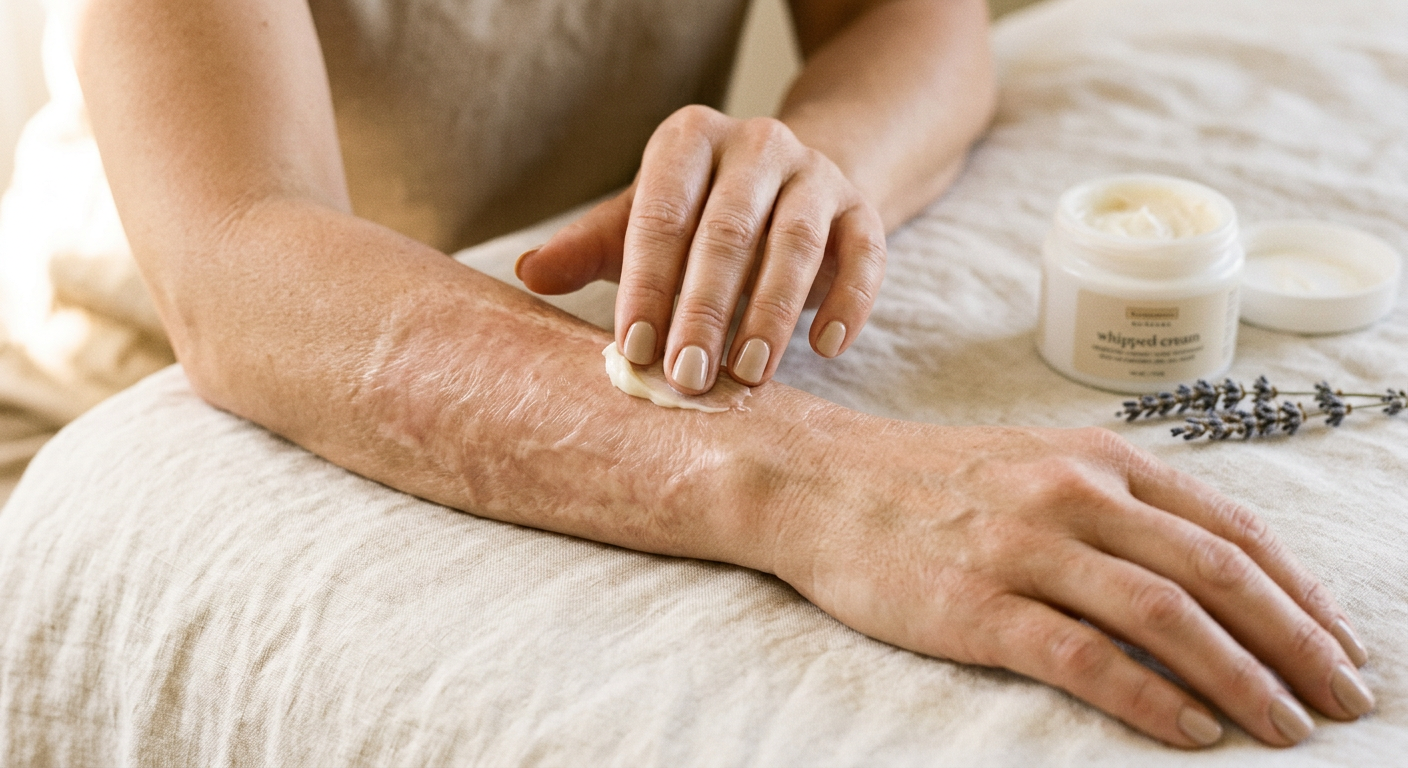
The discomfort that stays after healing
For many burn survivors, the hardest part begins after the wound has closed. Healed skin can feel tight when you move, dry no matter how much water you drink, and itchy in a way that wakes you at night. Many survivors describe the itch as one of the most persistent parts of recovery.
There is an emotional weight, too. Strangers stare or ask questions. Some people stop wearing shorts or short sleeves. My late husband Ric lived with extensive scarring on his legs and back for twenty years after a 2002 structure fire. I saw how much the daily discomfort wore on him, and how much it mattered when his skin finally felt comfortable.
Why scar tissue feels so dry and tight
Healthy skin has oil glands and sweat glands that keep it naturally soft and flexible. Deep burns can damage these structures, and scar tissue often has fewer of them, or none. That means scarred skin cannot moisturize itself the way the rest of your skin does.
Scar tissue is also less stretchy than healthy skin. It can pull across joints and feel tight. It is often more sensitive to heat, cold, and sun, and it can crack or split when it gets too dry. That is why the blood stains Ric left on clothes and sheets were so common for him.
Daily comfort habits that help
Follow your burn care team first. They know your skin, your grafts, and your stage of healing. Ask them before adding any new product, and before massaging scar tissue.
Wash with lukewarm water and a gentle, fragrance-free cleanser. Pat dry instead of rubbing. Moisturize while skin is still slightly damp, and reapply several times a day. Dry skin feels itchier.
Keep healed skin covered or protected with sunscreen when you are outside. Scar tissue burns easily. Choose soft, loose, breathable clothing, and keep your home on the cooler side, since heat can make itching worse.
If you are struggling emotionally, you are not alone. The Phoenix Society for Burn Survivors connects survivors and families with peer support.
The ingredients in beabutter, and why they matter
Plant butters. Scar tissue loses moisture quickly. Rich plant butters melt on warm skin and leave a soft, breathable layer that slows moisture loss. That keeps tight skin feeling comfortable for hours instead of minutes.
Botanical oils. Plant oils are rich in fatty acids such as linoleic and oleic acid, which are similar to the lipids in the skin's own barrier. They help stiff, dry skin feel more supple and less likely to feel like it will crack.
Hemp-derived botanicals. These are naturally rich in omega-3 and omega-6 fatty acids and are valued for a calming, comforting feel on skin that feels irritated or sensitive.
Natural antioxidants. Plant oils carry antioxidants such as vitamin E, which help protect skin from everyday environmental stress.
Water-free and gentle. beabutter contains no water and no synthetic fragrance. It is concentrated, so a little goes a long way, and the light botanical scent makes applying it a calmer moment in the day.
This is the cream I first made for Ric. Over time his skin felt softer and more hydrated than it had in years, and he felt comfortable in his own skin again. That is our family's experience, not a promise. beabutter does not change, fade, or reduce scars.
When to use it, and when not to
Use beabutter only on fully closed, healed skin. Never apply it to open wounds, fresh burns, blisters, or new grafts. Patch test on a small area first, especially on newly healed skin.
Call your doctor if your skin cracks and will not heal, becomes red, hot, swollen, or painful, or if itching stops you from sleeping. Prescription treatments, pressure garments, and scar therapies are medical care. A moisturizer is comfort alongside that care, not a replacement for it.
beabutter is a cosmetic skin-care product. It is not intended to diagnose, treat, cure, or prevent any disease. If you have a skin condition, talk with your healthcare provider before use.
Back to the journal