
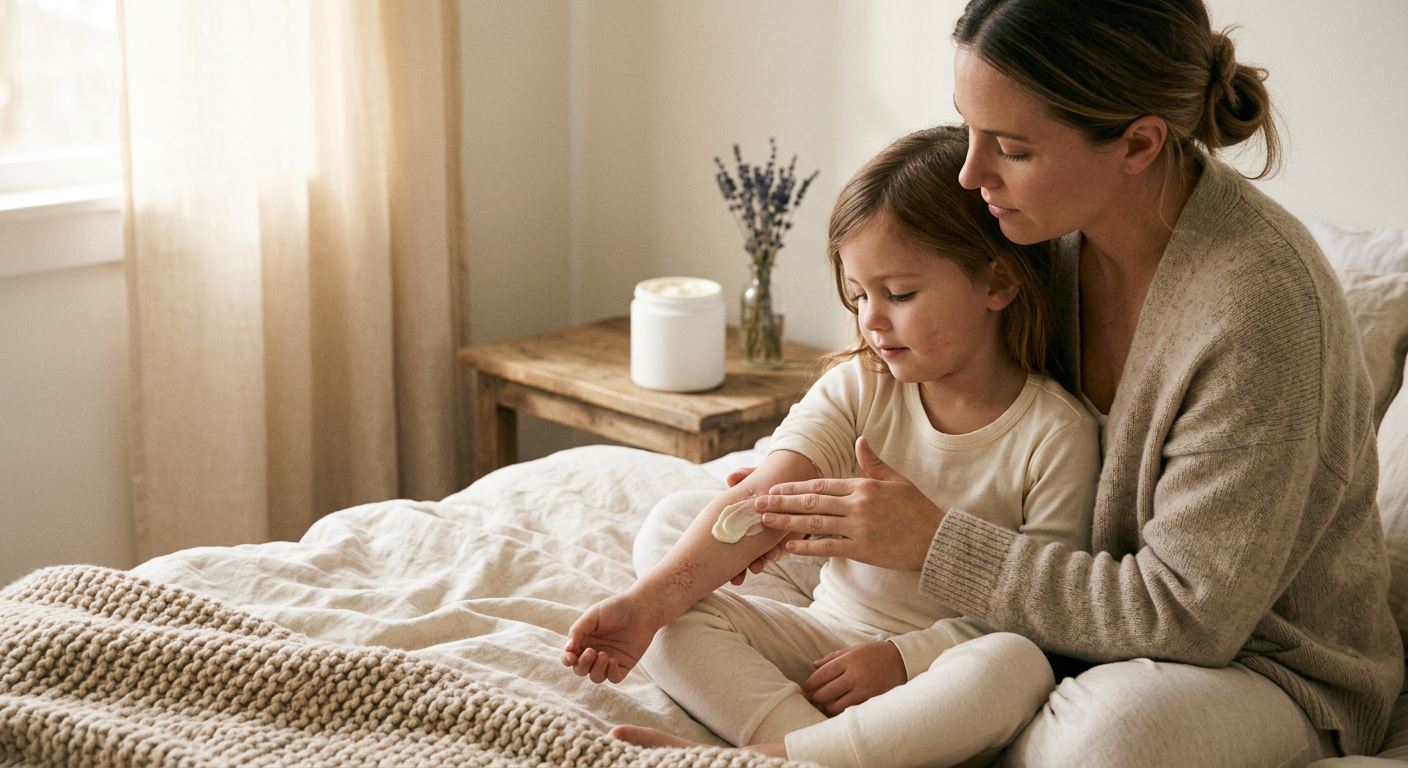
More than just dry skin
Eczema, also called atopic dermatitis, is one of the most common skin conditions in the world. It often starts in childhood, and many adults live with it too. It usually shows up as dry, rough, itchy patches, often in the bends of the elbows and knees, on the hands, the neck, and the face.
The itch is the hardest part. It can interrupt sleep, make it hard to focus, and turn into a cycle: scratching makes skin more irritated, and irritated skin itches more. For parents, watching a child scratch at night is exhausting and heartbreaking.
Why eczema-prone skin loses moisture
Healthy skin has a protective outer layer that works like a brick wall: skin cells are the bricks, and natural fats called lipids are the mortar. In eczema-prone skin, that mortar is weaker. Water escapes more easily, and everyday irritants get in more easily.
That is why dermatologists so often say moisturizing is one of the most important daily habits for eczema-prone skin. Keeping the barrier well supplied with rich moisture helps skin feel more comfortable between flares.
Gentle daily habits
Keep baths and showers short and lukewarm, not hot. Use a mild, fragrance-free cleanser and skip harsh soaps. Pat skin dry with a soft towel, leaving it slightly damp.
Moisturize within three minutes of bathing to hold in water, and again whenever skin feels dry. Many families keep a jar on the nightstand and another by the kitchen sink.
Choose soft cotton clothing, wash new clothes before wearing them, and keep fingernails short to limit damage from scratching. Notice your own triggers. Common ones are dry winter air, sweat, stress, wool, and heavily scented products.
The ingredients in beabutter, and why they matter
Plant butters. Rich, water-free plant butters form a soft, breathable layer on the skin that slows water loss. Because beabutter contains no water, it stays on dry skin longer than a lotion.
Botanical oils. Plant oils provide fatty acids such as linoleic acid, which are similar to the lipids in the skin's own barrier. They help rough, dry skin feel softer and more supple.
Hemp-derived botanicals. Naturally rich in omega-3 and omega-6 fatty acids, they are valued for a calming, comforting feel on skin that feels sensitive.
Natural antioxidants. Plant oils carry antioxidants such as vitamin E that help protect skin from everyday environmental stress.
A light botanical scent. beabutter uses no synthetic fragrance. Its gentle natural scent comes from plant-derived essential oils. Because some people with eczema react to essential oils, patch test before using it more widely.
Using it well, and safely
Patch test first: apply a small amount to the inner arm once a day for a few days. If there is no redness or itching, use it on dry areas after bathing and before bed. Avoid broken, weeping, or cracked skin.
For children, ask your pediatrician before starting any new product. See a doctor if skin becomes very red, hot, crusted, or weepy, if it does not improve, or if itching keeps you or your child from sleeping. Eczema often needs prescription care. beabutter is comfort alongside that care, not a replacement for it.
beabutter is a cosmetic skin-care product. It is not intended to diagnose, treat, cure, or prevent any disease. If you have a skin condition, talk with your healthcare provider before use.
Back to the journal